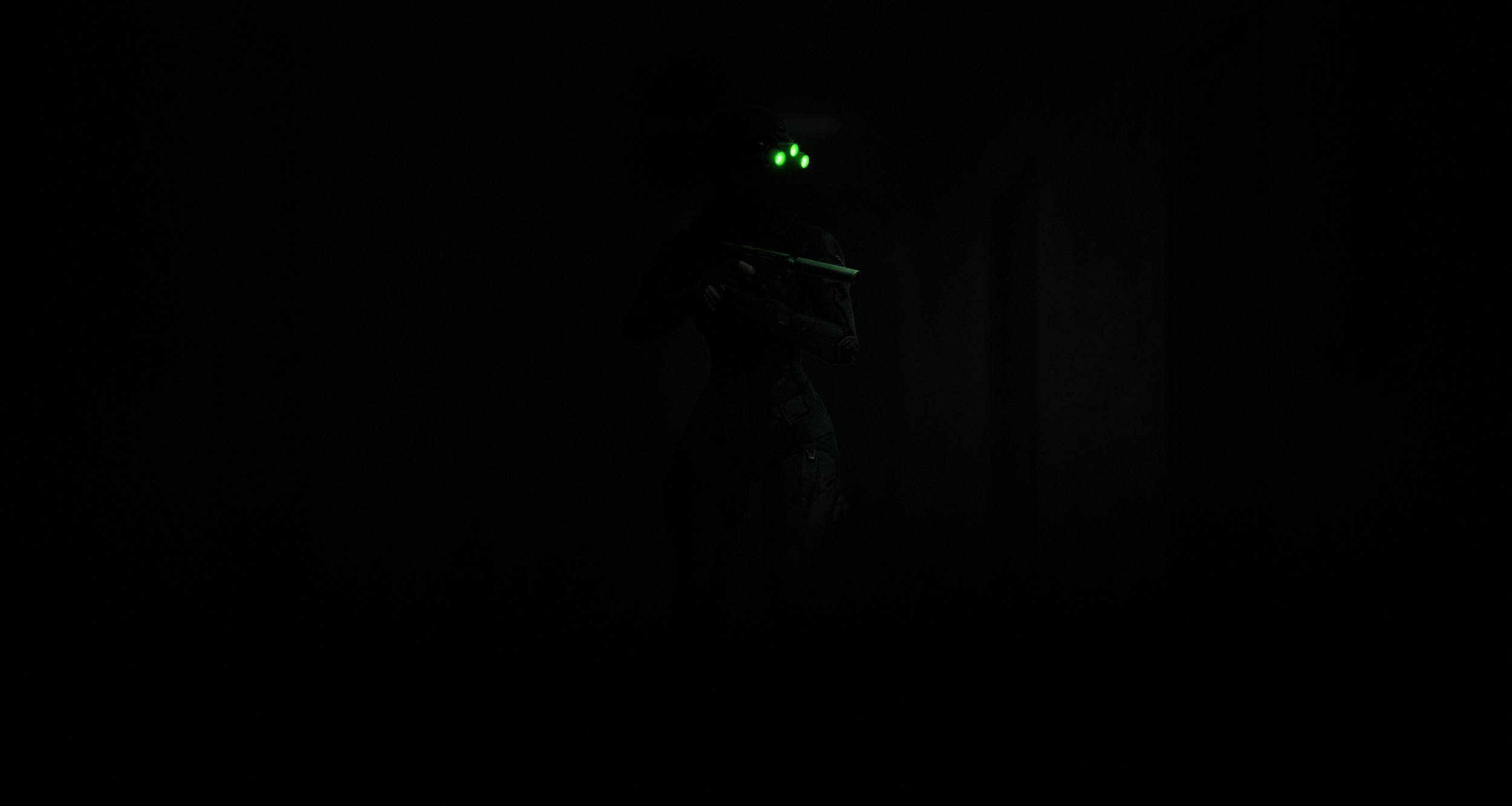
The last mainline Splinter Cell title, Blacklist, was released in 2013.
Since then, the franchise has remained inactive, despite its strong identity as a systemic, stealth-first experience and leaving behind one of the most refined stealth-focused game concepts ever produced.
This project is a personal design exploration of what a modern continuation of Splinter Cell could look like today, approached through the lens of UI, visual design, and art direction rather than narrative canon.


Creative & Visual Direction
The objective was to preserve the core pillars of the Splinter Cell experience - stealth, tension, readability, and player agency, while updating its visual language.
Visually, the project deliberately moves away from early 2000s techno-militaristic aesthetics in favor of cleaner interface design and structure, reduced visual noise and high-contrast readability (reenforcing the concept of light vs. shadow)
The result is a restrained, clean system designed to support stealth gameplay rather than compete with it.
Interface Philosophy: Light as Information
Set in a near-future Japan, the UI direction is influenced by minimalist principles and by Jun’ichirō Tanizaki’s concept that shadow, not brightness, is where atmosphere and meaning emerge.
From a UI perspective, this translated into darkness used as negative space, light treated as a functional signal rather than decoration and information revealed contextually.
The interface avoids constant feedback and instead reinforces stealth through absence, silence, and delayed information.
Narrative Context as Design Support
To ground design decisions, a light narrative framework was developed to inform tone, hierarchy, and interaction logic.
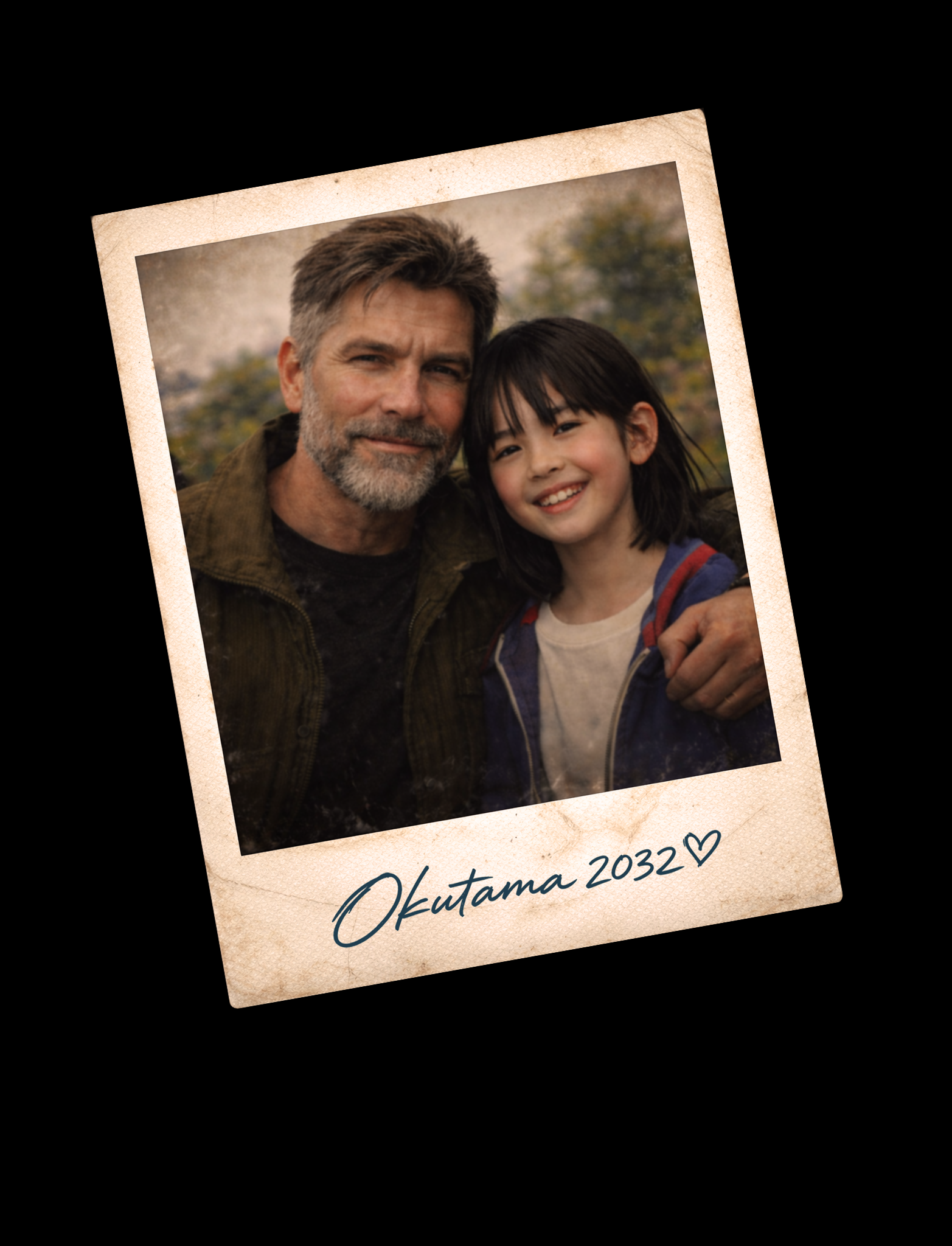
The project is set in a near-future Japan following the unexplained disappearance of Sam Fisher.
Presumed dead, his absence shapes both the world and the player’s role.
The player assumes the role of Rei Ito Fisher - possibly his daughter - navigating a story of secrecy, betrayal and moral ambiguity, through stealth, observation, and controlled violence.
Gameplay & Systems Focus:
From a systems standpoint, the design prioritizes:
- Stealth and close-quarters mechanics over weapon diversity
- Fewer tools with deeper mechanical expression
- Story-driven tension over power escalation
The experience is framed as a slow-burn techno-thriller, where player progression is measured in control, patience, and perception, rather than loadout power and complexity.
Main Navigation UX Wireframes
UI, HUDS & WORLD


World as Interface
Instead of relying on a non-diegetic HUD to indicate visibility, the game communicates stealth directly through light and shadow. When Rei is fully concealed, she truly disappears into darkness.
Subtle micro-lights integrated into the suit provide just enough visual feedback to maintain spatial awareness - head, posture, and weapon - without breaking immersion.
This approach replaces meters and indicators with environmental clarity, reinforcing the fantasy of an operative who understands visibility instinctively and treats shadow as a tactical tool.
Final Notes
To consolidate these ideas and showcase both UI and visual design, I needed a cohesive set of in-game backdrops and contextual screens to support the UI and HUD work.
This project was developed as a solo effort. To meet the time constraints of closing a portfolio, and as I am not a 3D artist, I combined AI image generation with extensive Photoshop work to produce environments, characters, and presentation assets.
Several weapons and gadgets featured here are based on assets created by Filippo Ubertino, Boris Martirosian, and Alexey Tyutyukin, exceptional 3D artists with amazing work online.
Filippo Ubertino - https://www.artstation.com/artwork/oAd1wO
Boris Martirosian - https://www.artstation.com/artwork/mAn2yv
Alexey Tyutyukin - https://www.artstation.com/artwork/lxJPyG

Thanks for watching!
Though dormant for years, Splinter Cell remains one of Ubisoft’s most iconic franchises.
Launched in 2002, Splinter Cell has spanned six mainline titles and multiple platforms, reaching tens of millions of players worldwide and shaping Ubisoft’s approach to tactical and stealth-driven game design.